
“Cannabis consultant” gets used loosely, sometimes for anyone who has ever grown a plant or worked a dispensary counter. The job I mean is narrower and more technical. It is turning state and local cannabis law into a plan a business can carry out without losing its license.
“A cannabis consultant is a specialist who translates cannabis laws and local rules into a step-by-step plan for your business, covering licensing strategy, compliant real estate, SOPs and training, business formation, and capital/exit planning.”
That is a fair definition, and the five areas it names are a good way to organize the rest of this article.
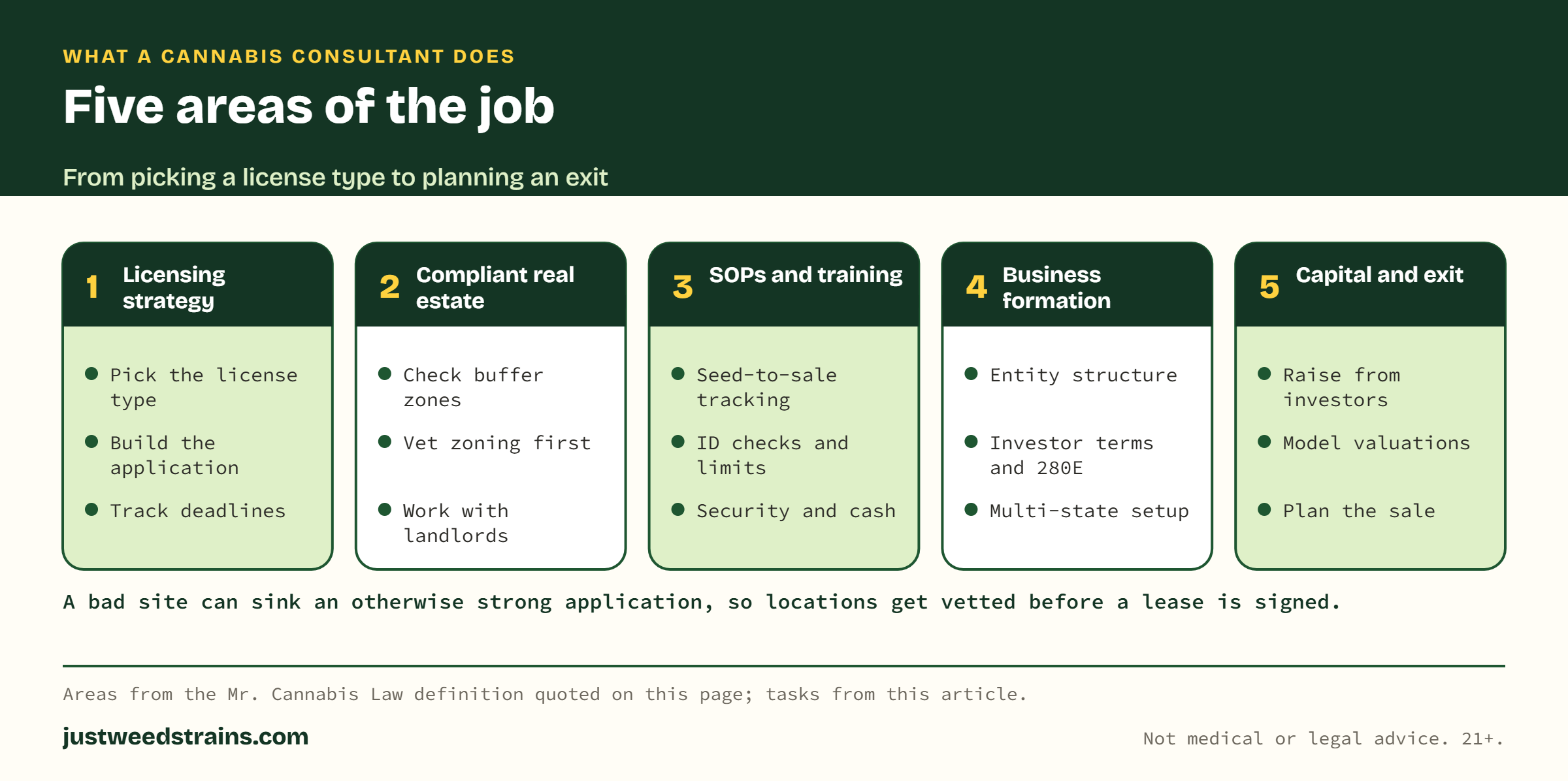
Licensing Strategy
Every state, and often every city or county within a state, has its own cannabis licensing process, application windows, and eligibility rules. In New York, for example, dispensary licensing runs through a multi-step state review before a single storefront can open. A consultant helps a business:
- Identify which license type fits the business plan (retail, cultivation, processing, distribution, or a hybrid).
- Build out the application itself, including ownership disclosures, security plans, and community impact materials where required.
- Track deadlines and public comment periods, which can make or break an application in competitive markets.
Compliant Real Estate
Cannabis zoning is decided town by town. A location that’s perfectly legal for a dispensary in one town can be disqualified a few blocks away because of a school, church, or park buffer zone. Consultants typically:
- Vet potential locations against state and municipal buffer and zoning requirements before a lease gets signed.
- Coordinate with landlords and local officials who may be unfamiliar with cannabis-specific building and security codes.
- Catch location problems early, because a bad site can sink an otherwise strong application.
SOPs and Staff Training
Regulators expect licensed cannabis businesses to operate under documented standard operating procedures (SOPs), covering everything from inventory tracking (seed-to-sale systems) to age verification and product recalls.
- Inventory and seed-to-sale compliance. Every unit of product needs to be tracked through the state’s system.
- Staff training programs. Budtenders and managers need documented training on ID checks, purchase limits, and responsible sale practices.
- Security and diversion prevention. SOPs typically cover camera coverage, safe handling of cash, and product loss prevention.
Business Formation
Cannabis businesses face structuring questions that don’t come up in most other industries, largely because cannabis remains federally illegal even where state-legal. Consultants often work alongside attorneys and accountants on:
- Choosing an entity structure that fits the state’s ownership and social equity requirements.
- Structuring investor agreements around the industry’s unusual banking and tax constraints (including the impact of federal tax code Section 280E).
- Setting up multi-state operating structures for businesses expanding beyond one market.
Capital and Exit Planning
Access to capital is one of the biggest constraints in cannabis, since many traditional lenders still won’t touch the industry. A consultant can help a business:
- Prepare materials for raising capital from private investors, family offices, or cannabis-focused funds.
- Model out realistic valuations given the industry’s thin margins and heavy tax burden.
- Plan an eventual exit, whether that’s an acquisition by a larger multi-state operator or a smaller local sale.
Why Businesses Hire a Consultant Instead of Going It Alone
Cannabis regulations change often, and small mistakes are expensive. An incomplete application, an SOP that has drifted out of compliance or an error in an ownership disclosure can cost a business its license. A consultant has usually watched those mistakes happen to someone else, and paying for that experience costs less than repeating it.
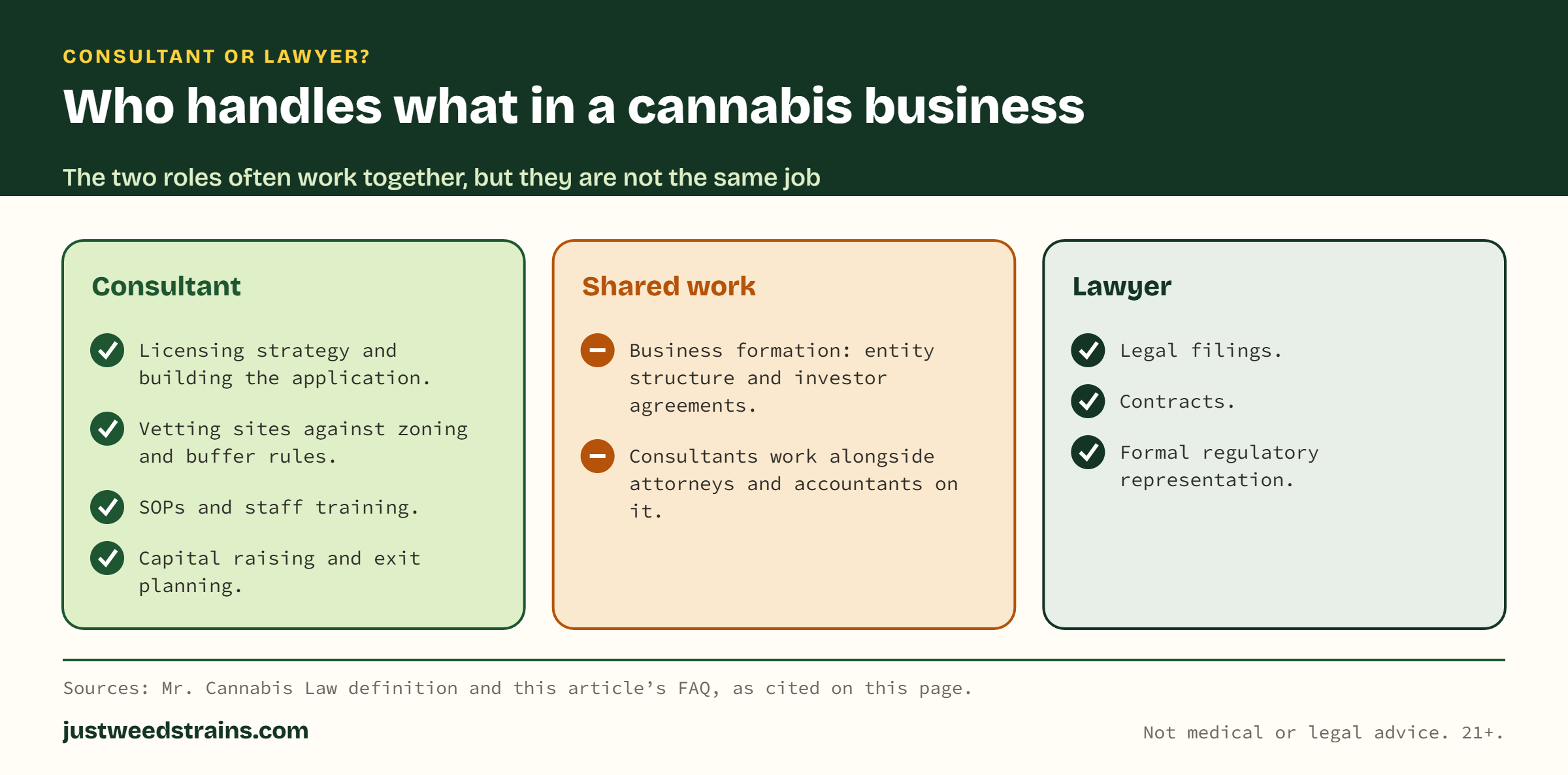
Frequently Asked Questions
Is a cannabis consultant the same as a cannabis lawyer?
No, though the two roles often work together. A consultant typically focuses on operational and business strategy, while a lawyer handles the legal filings, contracts, and formal regulatory representation.
Do I need a consultant to apply for a cannabis license?
It’s not required in most states, but given how competitive and detail-heavy license applications tend to be, many applicants find the guidance worth the cost, especially in markets with social equity or limited-license programs.
What industries do cannabis consultants come from?
Backgrounds vary widely, from prior cannabis operators to people who came from adjacent regulated industries like alcohol, pharmaceuticals, or real estate development, where compliance-heavy business planning is also the norm.
Daniel Levinson is a cannabis industry consultant and an advisor to Just Weed Strains. He has more than six years of experience in the sector, covering go-to-market strategy, regulatory compliance, licensing and capital raising, with a focus on the Israeli and international medical cannabis markets. He writes here on cannabis business, regulatory and dispensary topics.