Israel has one of the oldest medical cannabis programs in the world and one of the most centralized. It runs through the Ministry of Health, where the U.S. has a different rulebook in every state. Patient numbers reached a record this year. Much of my consulting work is in this market, so this is my account of how the Israeli model is put together and which parts of it could travel.
The Numbers Behind Israel’s Program
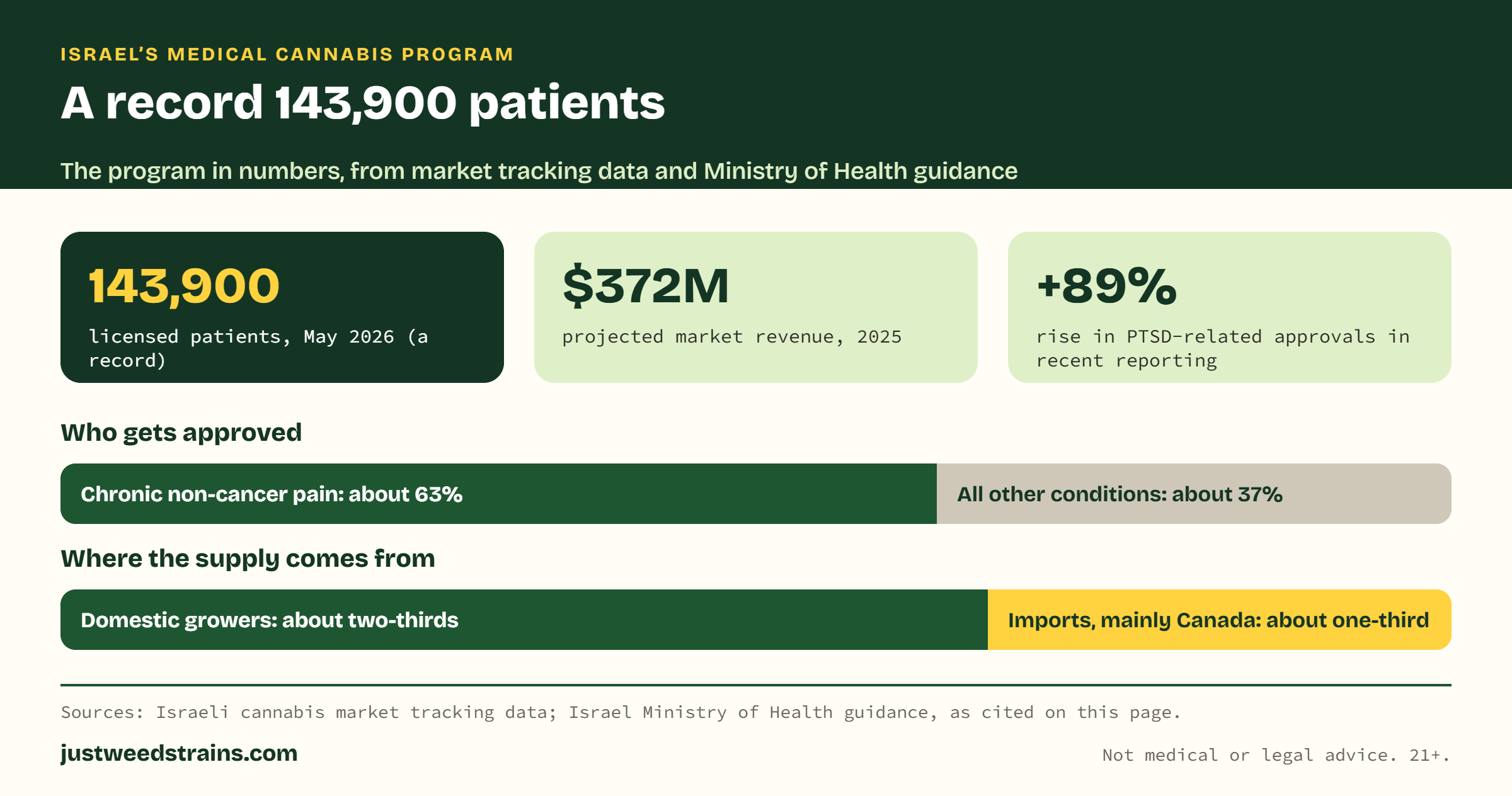
- Licensed medical cannabis patients hit roughly 143,900 as of May 2026, a record high for the program.
- Israel’s medical cannabis market was projected at around $372 million in 2025 revenue.
- Domestic growers supply roughly two-thirds of the market, with Canada as the country’s main import source for the rest.
- Chronic non-cancer pain accounts for about 63% of patient approvals, the largest single category.
- PTSD-related approvals have climbed sharply, up around 89% in recent reporting.
These figures come from market tracking data on the Israeli cannabis sector, alongside Israel’s own Ministry of Health guidance on medical cannabis treatment.
How the Israeli System Works
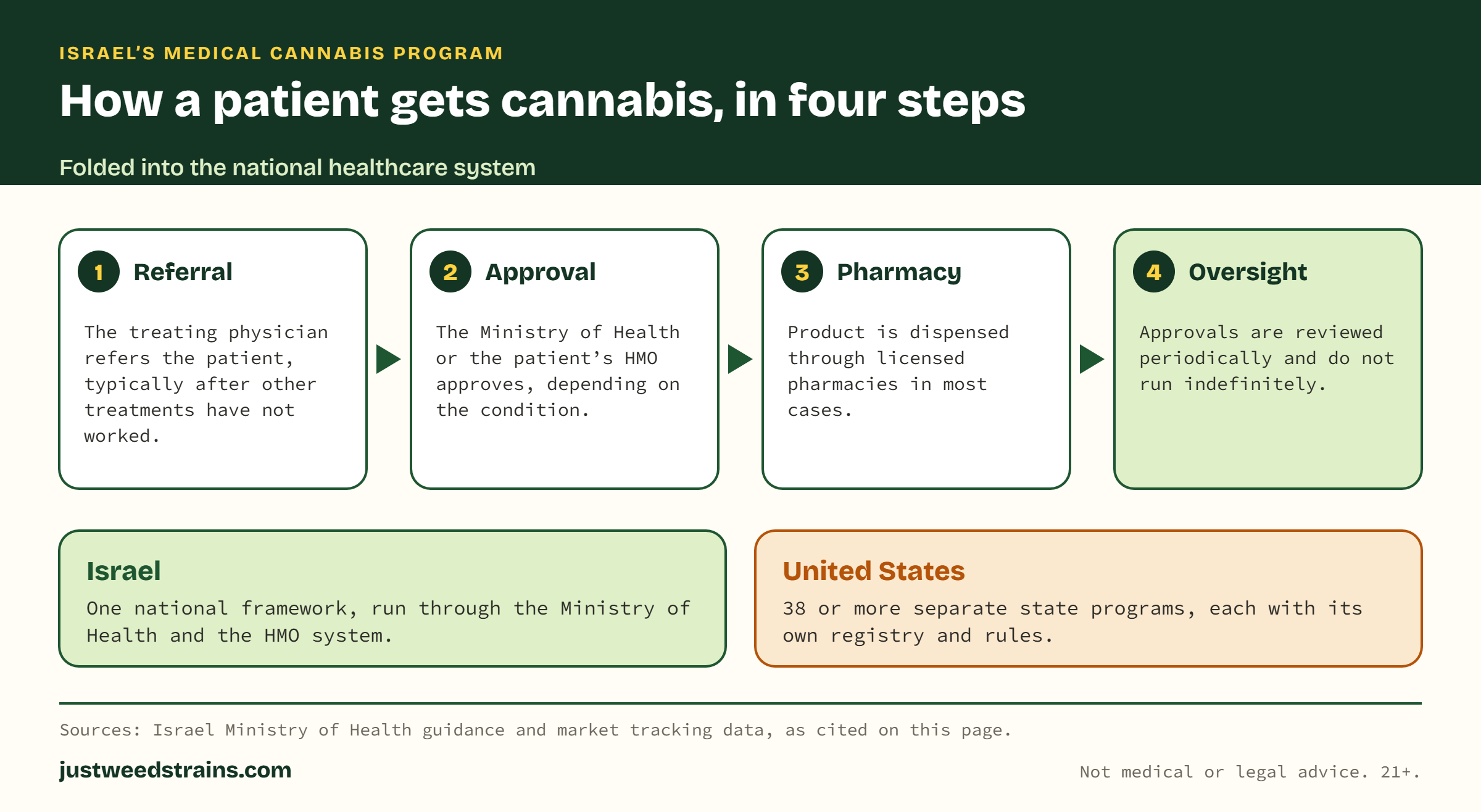
Unlike most U.S. states, where medical cannabis programs run through a state health department separate from the rest of the healthcare system, Israel folds medical cannabis directly into its national healthcare structure.
- Physician referral. A patient’s treating physician must refer them for medical cannabis, typically after other treatments haven’t worked.
- Ministry of Health or HMO approval. Depending on the condition, approval runs either through direct Ministry of Health licensing or through the patient’s health maintenance organization (HMO).
- Licensed pharmacy dispensing. Patients pick up product through licensed pharmacies rather than freestanding dispensaries in most cases.
- Ongoing physician oversight. Approvals are reviewed periodically and do not run indefinitely.
Exports: The Next Phase
Israel has also pushed to become an exporter. The government approved medical cannabis exports in May 2020, and companies with a small home market said at the time that sales abroad were central to their plans.
“The advancement of the export market for medical cannabis products from Israel is a very significant development for IMC’s international strategy.”
What the U.S. Industry Can Learn
- Centralized oversight reduces confusion. A single national framework, rather than 38+ different state programs, means patients and physicians deal with one consistent set of rules.
- Approval by the treating physician builds legitimacy. The patient’s own doctor makes the referral, with no separate visit to a cannabis clinic, so the treatment stays inside ordinary medical care.
- Pharmacy distribution normalizes the product. Dispensing through licensed pharmacies, similar to how licensed dispensaries operate in states like New York, but integrated with the broader healthcare system, is a model few U.S. states have tried.
- Exports take years. Israel’s approval came in 2020, and approval was only the starting line. U.S. companies looking abroad should plan for a long runway.

Frequently Asked Questions
How many people use medical cannabis in Israel?
Around 143,900 patients were licensed as of May 2026, according to industry market tracking, the highest figure on record for the program.
Does Israel export medical cannabis?
Yes. Israeli regulators have approved export pathways for medical cannabis products, and companies such as IMC have named exports as a core part of their plans.
Is Israel’s medical cannabis program similar to U.S. state programs?
Not really. Israel runs medical cannabis through its national Ministry of Health and HMO system, integrated with mainstream healthcare, while U.S. programs are set state by state with their own separate registries, dispensaries, and rules.

Daniel Levinson is a cannabis industry consultant and an advisor to Just Weed Strains. He has more than six years of experience in the sector, covering go-to-market strategy, regulatory compliance, licensing and capital raising, with a focus on the Israeli and international medical cannabis markets. He writes here on cannabis business, regulatory and dispensary topics.